Books
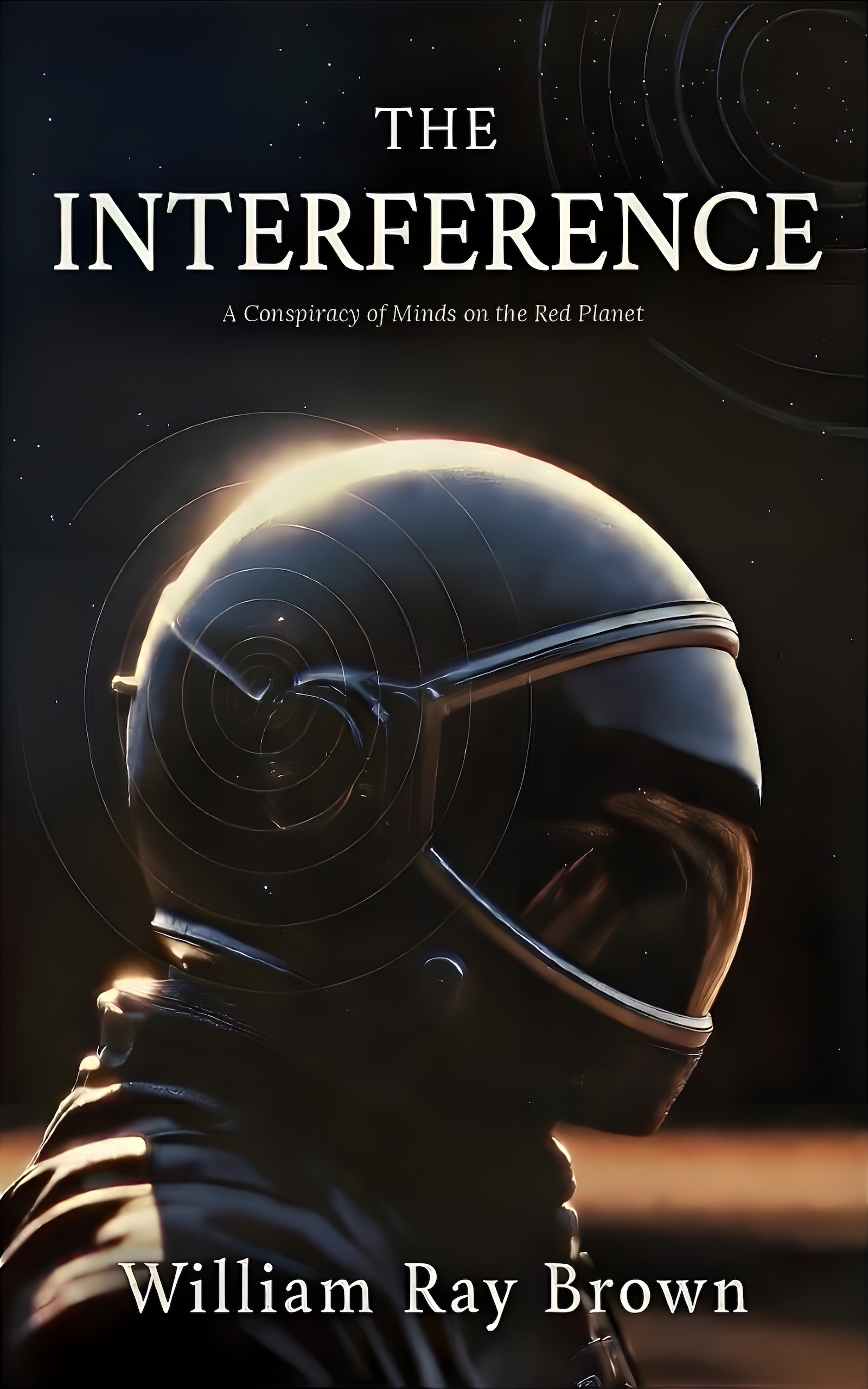
The Interference
A Conspiracy of Minds on the Red Planet
In 1974 the US government approved a patent for a device that could monitor and alter human brain waves from a distance. No contact required. No awareness required on the part of the subject.
That patent is still in the public record. US3951134. You can look it up.
James Harlan spent eight years wired into a neural mesh that connected his mind to three others across millions of miles. He knows what a clean signal feels like. He knows what it feels like when something else gets in.
The colonists at Arcadia Base on Mars are hearing voices. Some describe music. Others describe commands. The Colonial Authority needs someone who knows the hardware from the inside.
What Harlan finds when he arrives is not a malfunction. The mesh is working exactly as designed. The question is who designed it to do this.
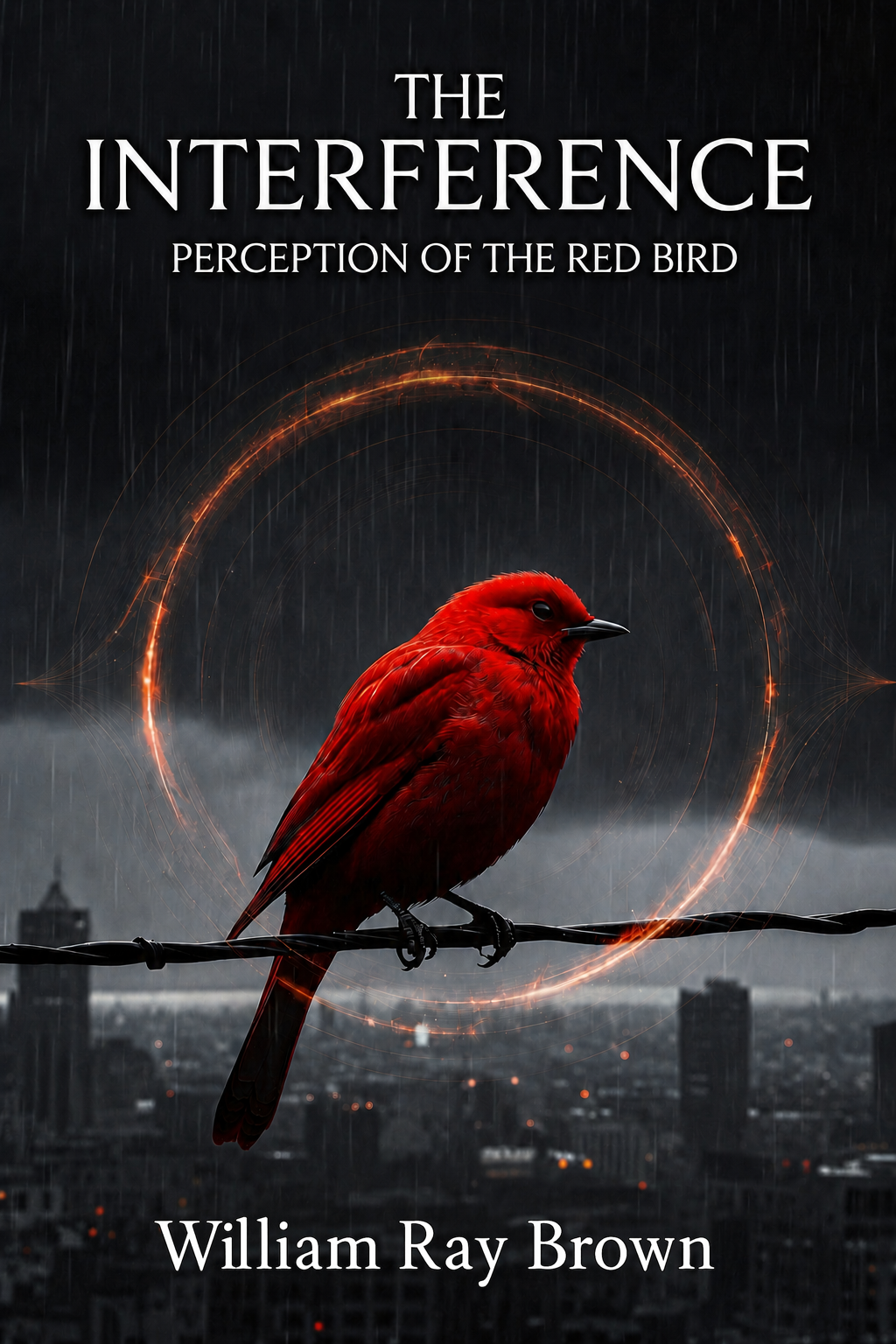
The Interference
Perception of The Red Bird
A classified program has been running on Mars for over two decades. It targets the mind. Specifically, the part that decides what is real.
James Harlan came back from Mars eleven weeks ago. Federal investigator. He exposed something up there, and powerful people are now working to contain it through official channels. That is the most dangerous kind of containing there is.
His post-mission medical clearance came back with one anomaly. Residual electromagnetic activity in a surgical scar he has carried for ten years. The signal is new. The scar is not.
Then a man named Thomas Sparks contacts him from a federal supervised residence in Sacramento. Sparks ran his own investigation at a different facility, fourteen months before Harlan's mission. What he found was cruder. Older. A pilot program. Harlan arrived at the middle of something that started long before Arcadia.
The classification orders sealing Sparks's evidence expired legally years ago. They are still active in the system. The inquiry Harlan triggered has eighteen days before its window closes for good.
The program is still running. It has been since before anyone thought to look.
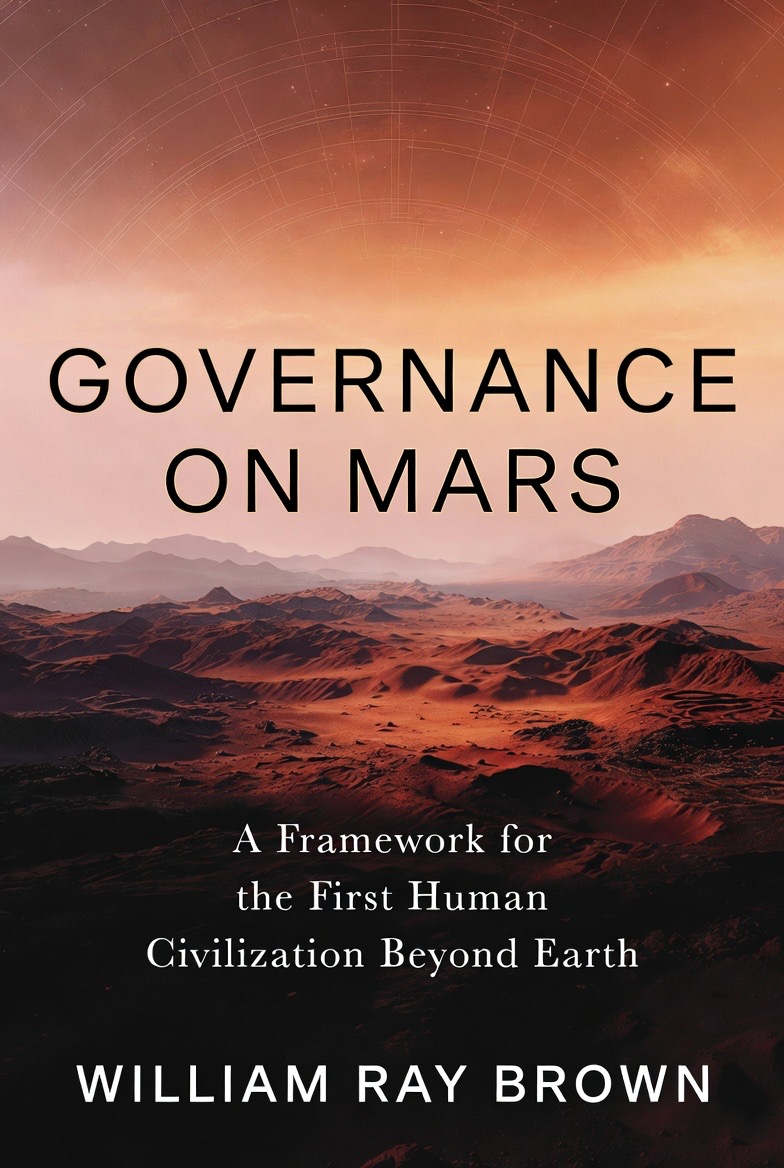
Governance on Mars
A Framework for the First Human Civilization Beyond Earth
On January 27, 1967, the United States signed the Outer Space Treaty. That evening three astronauts died in a fire inside the Apollo 1 command module. The treaty kept weapons out of orbit. It never anticipated permanent settlement.
Mars colonization now moves forward on real schedules and real budgets. No adequate legal framework exists to govern the people who will live there. This book examines four governance models, the treaty model, the corporate model, the colonial model, and the Antarctic model, and shows why each one fails.
From the physical constraints of Mars itself, the speed of light, the absence of exit, the transportation monopoly, population growth, and the threat of lethal emergencies, the author builds five governing principles into a one-page framework. Three tiers of authority. A protected rights floor. Automatic transitions to self-government at fixed population thresholds.
The first child born on Mars deserves better than rules improvised under pressure. Read this before the first boots touch the ground.